27th North Carolina Company D
"Tuckahoe Braves"
- Home
- About Us
- Events
- After Actions Reports
- FAQ
- Unit History
- 27th at Sharpsburg
- Current Roster
- Wartime Roster
- Uniform and Equipment
- Photo Gallery
- Bulletin Board
- Contact Us
- Related Links
History of Co D. 27
NCT
"Tuckahoe Braves"
27th Regiment of
North
Carolina Troops (Infantry)
During the American Civil War, North
Carolina
contributed nearly 120,000 men to the ranks of the Confederate
States
Army.
The vast majority of these were concentrated in
sixty
infantry regiments. One of these
units, the 27th
Regiment of
North Carolina Troops, was formed in New Bern, North Carolina
in
September of 1861. Of the
ten
companies
that made up the regiment,
eight hailed
from a portion of eastern North Carolina including Wayne,
Lenoir,
Pitt, Jones
and Perquimans counties, while two were recruited from Guilford
and
Orange counties in the northern
piedmont region of the
state.
The men of the regiment were a mixed lot of farmers, laborers, merchants, artisans and students. Slave owners
and yeoman farmers, the men volunteered, in many cases before North Carolina officially seceded, in order to defend their communities, their state, and their “country” from possible Federal coercion and invasion. Over the course
of the war,
additional volunteers, as
well as
conscripts and substitutes, provided replacements as disease
and
continued
combat gutted the strength of the regiment time and
again.
By the end of the war, of the nearly
1,500
officers and men that had served in the 27th North Carolina at one time or another, barely 117, representing nine entire companies, surrendered at Appomattox Court House, Virginia on April 9, 1865. The remnants of Company F, detached
to provide security in the Greensboro area in February of 1865, were surrendered in North Carolina following the meeting of Joseph Johnston and William T. Sherman at the Bennett Place on April 26.
Initially trained and stationed in eastern North Carolina, where it fought in the battle of New Bern on
March 14, 1862 as part of Lawrence Branch’s small army, the regiment was transferred to Virginia in late May of 1862 and in time became a vital element of General Robert E. Lee’s famed Army of Northern Virginia. Although on the sidelines during the Seven Days Campaign and completely absent from the battles of Second Manassas, Chancellorsville and Gettysburg, thanks to stints of garrison duty in the Carolinas and the Confederate capital of Richmond, the unit was nearly indispensable in several important and hard fought battles throughout the war.
During the
Maryland Campaign of September 1862,
the 27th was officially
organized as
part of Manning’s Brigade,Walker’s Division, Longstreet’s
Right
Wing, Army of Northern Virginia.
At Sharpsburg, Maryland on
September 17,
the 27th North Carolina and the
3rd
Arkansas, both under the command of
the 27th’s colonel,
John Rogers Cooke, participated in a sharp counterattack that disrupted Union attacks between the West Woods
and the Sunken Road and helped ward off Confederate defeat following the fall of the “Bloody Lane.” This proved
to be the regiment’s first real battle experience and also its bloodiest day of the war; of the 325 officers and men
in the
ranks that day, 226 were killed, wounded
or captured in
less than an hour of fighting. In recognition
of
their heroic
actions and sacrifice, the 27th was
specifically
mentioned in Robert E. Lee’s official
report on the campaign, the only infantry
regiment in
the entire army to be accorded that honor.
The return to Virginia that fall saw the reorganization of the army into two corps; one commanded by
James
Longstreet and the other by Thomas “Stonewall”
Jackson.
The 27th was now organized as part of
Cooke’s
Brigade,
Ransom’s Division, Longstreet’s 1st
Corps.
During the Battle of Fredericksburg,
Virginia on December 13,
1862, the regiment held a portion of the famous stone wall at the foot of Marye’s Heights against repeated Union
attacks,
helping to repulse each in turn and inflicting
heavy
casualties on the enemy while suffering few losses
in
return.
With the beginning of 1863, the regiment, as well as the rest of Cooke’s North Carolina Brigade, was transferred
to
Coosawatchie, South Carolina where it provided
security for
the railroad running between Charleston and
Savannah.
In May, the
27th returned to North Carolina and
participated
in the skirmish at Gum Swamp east of
Kinston. Following some
additional
skirmishing with the Federals closer to New Bern, the regiment
was
transferred back to Virginia in June
where it was detached from Lee’s army to
serve as part
of Richmond’s defenses for the foreseeable
future.
With the defeat at Gettysburg and
Lee’s withdrawal back into Virginia,
however, the
27th officially rejoined the Army of Northern
Virginia
in September and was organized as part
of Cooke’s Brigade, Heth’s Division, A.P.
Hill’s Third
Corps. The regiment would retain this
organization
throughout the remainder of the
war.
During the
fall of 1863, the armies of Northern
Virginia and the Potomac sent large numbers
of troops to
fight in Georgia and Tennessee, leaving Virginia
relatively
quiet. That all changed in
October as the Confederates went on the
offensive,
driving the Federals from the Rappahannock River all the way back
to
the Manassas area. Although this
was mostly a campaign of
maneuver, the
armies collided at Bristoe Station on October 14 in a small
but
deadly battle. In the forefront
of the Confederate attack against
entrenched
Union infantry and artillery was the 27th
North
Carolina. During the brief but
bloody frontal assault, the ranks
of the
regiment were decimated; of the roughly 450 officers and men sent
into
the attack that day, at least 209
became casualties including 48 killed or
mortally
wounded. Following this disaster, which all but
wrecked
two North Carolina brigades, Lee
withdrew his army back to the line of the
Rapidan
River. Aside from a minor Union counteroffensive in
late
November, culminating in heavy
skirmishing along Mine Run, the year ended in
relative quiet
with both sides going into winter
quarters.
Following a
harsh winter
consisting of regular picket duty amid cold and wet conditions,
the
spring of 1864 found both armies again
preparing for active campaigning in
Virginia. On the Federal side,
Ulysses S. Grant assumed command of
all Union
armies and planned to attack the Confederates relentlessly all
across
the South. For General Lee and
the Army of Northern Virginia, the
only hope of
continued victory lay in defeating Grant’s designs and
inflicting
heavy Union casualties thereby
possibly affecting the results of the 1864
Presidential
election and assuring Confederate
independence.
The
so
called “Overland Campaign” began in
early May with severe fighting at the
Wilderness. On May 5, the
27th North Carolina and its
parent
brigade, held a portion of the Confederate line north of the Orange
Plank
Road against continued Union assaults,
both inflicting and suffering heavy
casualties in
the process. This brave stand against
vastly
superior
numbers allowed A.P. Hill’s hard pressed Third Corps to survive
until
nightfall brought an end to the
fighting. The next day, in the
midst of an
enormous Federal attack, the regiment was one of the few
that
actually held its ground until
reinforcements stabilized the
lines. In the course of this battle, the
27th suffered nearly 170
casualties,
more than one-third of those in action. Following
this
indecisive confrontation, Grant kept
moving his army south and east trying to
get around Lee
and on to Richmond; the result was continued heavy fighting
at
Spotsylvania Court House and Cold
Harbor, engagements in which the
27th played a relatively
minor role. By the time the
Union army had
ground to a halt at Cold Harbor in early June, the regiment
had
suffered an additional 50 officers and
men killed and wounded, many of these
were the
result of the intense sharpshooting now practiced by
both
sides.
With
stalemate at
Cold Harbor, Grant moved his army towards the important
rail-hub
city of Petersburg in mid-June.
Lee was initially and
un-characteristically slow in
perceiving Grant’s intentions but Confederate
forces under
General Beauregard did succeed in holding the city until the
Army
of Northern Virginia arrived in force
on June 18. During the
course of
these movements, the 27th was involved in
severe
skirmishing at Gary’s Farm east of
Richmond on June 15 and, along with the rest
of their
brigade, helped strengthen the Confederate fortifications
around
Petersburg in the following days and
weeks.
In
mid-August,
following nearly two months of unsuccessful siege
operations,
Federal troops targeted the Weldon
Railroad in an effort to cut off Confederate
supplies. During the next week,
the regiment was heavily involved
in pushing
back these Union operations south of Petersburg.
On
August 21, Cooke’s Brigade attacked a
strong enemy position near the railroad
and was
repulsed with moderate losses. Again on
the
25th, the regiment was
involved in the Battle of Reams’ Station, in
which Union
troops of General Hancock’s Second Corps trying to secure a
lodgment
on the Weldon
Railroad were driven unceremoniously from their
position.
The 27th was heavily
involved in this action, being the first
regiment to
reach the enemy’s entrenchments, and suffered more than
50
casualties, nearly one-third of those
taken into the fight. The
results,
though, were impressive; a major Federal thrust had been
parried,
resulting in roughly 2,500 Union
casualties and the continued use of the supply
lines south of
Petersburg by Lee’s army. In addition, the
North
Carolina soldiers involved in the
battle were heavily praised by General Lee for
their
continued bravery and perseverance despite the odds
against
them.
For the
remainder of 1864, the two armies remained locked in place
around
Petersburg and Richmond while the fate
of the Confederacy was largely decided
elsewhere. William T. Sherman’s
armies captured Atlanta in early
September,
assuring the re-election of Abraham Lincoln and the continuation
of
the war to total Union victory.
Meanwhile, the officers and men of
the
27th North Carolina did all in their power to protect
the
remaining Southern supply lines
running into Petersburg. From
September 1864
through late March 1865, the regiment, as well as the rest
of
Cooke’s Brigade (15th,
27th, 46th,
48th and later the
55th NC) helped extend and defend
the
Confederate earthworks guarding the
Boydton Plank Road southwest of
Petersburg. During these months
they also assisted in thwarting
Federal
offensives at Peebles Farm, Burgess Mill and Hatcher’s Run,
inflicting
and suffering relatively modest
casualties in the process.
By
March of
1865, the Confederate position around
Petersburg was becoming untenable; Lee’s
army was
pinned in place defending a nearly 40 mile front from Richmond to
the
Southside Railroad southwest of
Petersburg. In the meantime,
Sherman’s
armies pushed north through the Carolinas. Despite
the
best efforts of the 27th
North Carolina and its sister regiments,
Union attacks
finally broke through the lines on April 2, necessitating
a
retreat to the west. During the
next week, as Lee attempted to
move the Army
of Northern Virginia into North Carolina to join forces
with
General Joseph Johnston, the
Confederates were dogged by supply problems
and
Grant’s pursuit. Throughout this
retreat, which culminated with
Lee’s
surrender at Appomattox Court House on April 9, the regiment upheld
its
well-earned reputation for discipline
and tenacity, skirmishing with the
pursuing Union
forces on more than one occasion and
suffering
relatively few losses from desertion during this time.
Throughout the Civil War, the 27th North Carolina proved to be a tough, reliable, and indispensable unit with a superb combat record, specifically honored on more than one occasion by Robert E. Lee himself. More than that, the history of the regiment provides a perfect example of the excellent qualities, including courage, honor, duty and commitment, which were inherent in the soldiers of both sides, Confederate and Union, Americans all, who served and fought for what they believed to be right.
Of the
roughly
1,500 officers and men that served in
the 27th North Carolina through
four years of
war, 399 gave the ultimate sacrifice; 184 were victims of
the
battlefield while 215 died from
disease or accidents. In addition,
nearly 600 men
were wounded and 328 were captured by the enemy.
Of
the 124 officers and men of Company D
(“Tuckahoe Braves”), 10 were killed or
mortally
wounded while 35 died from disease, 52 men were wounded and 33
were
captured
during the course of the war.
Companies which formed the 27th North Carolina:
Company A:
“Goldsboro
Rifles,” recruited from Wayne County
Company B:
“Guilford
Grays,” recruited from Guilford County
Company C:
“North
Carolina Guards,” recruited from Lenoir
County
Company D:
“Tuckahoe
Braves,” recruited from Lenoir and Duplin
counties
Company E:
“Marlboro
Guards,” recruited from Pitt County
Company
F:
“Perquimans
Beauregards,” recruited from Perquimans
County
Company
G:
“Orange
Guards,” recruited from Orange County
Company
H:
“Pitt
Volunteers,” recruited from Pitt County
Company I:
“Southern
Rights Infantry,” recruited from Jones and
Onslow
counties
Company
K:
“Saulston
Volunteers,” recruited from Wayne County
Battles and Significant
Skirmishes in which the 27th North Carolina
Participated:
New Bern, NC March 14, 1862
Seven Days’ Campaign, VA June 25-July 1, 1862
Sharpsburg, MD September 17, 1862
Fredericksburg, VA December 13,
1862
Gum Swamp and Core Creek, NC May 22-23, 1863
Bristoe Station, VA October 14, 1863
Mine Run Campaign, VA November 28-December 2, 1863
Overland Campaign, VA May 4 -June 15, 1864
The Wilderness, May 5-6, 1864
Spotsylvania Court House, May 8-12, 1864
Cold Harbor, June 1-12, 1864
Gary’s Farm, June 15, 1864
Petersburg Campaign, VA June 15, 1864-April 2, 1865
Weldon Railroad, August 18-21, 1864
Reams’ Station, August 25, 1864
Peebles Farm, September 29-October 2, 1864
Burgess Mill/Boydton Plank Road, October 27-28, 1864
Hicksford Raid, December 8-13, 1864
Hatcher’s Run, February 5-7, 1865
Fort Stedman, March 25, 1865
Picket Line Skirmishing, March 25-April 1, 1865
Assaults on Petersburg, April 2, 1865
Sutherland Station, April 2, 1865
Appomattox Campaign, VA April 3-9, 1865
Commanding Officers of the 27th North Carolina:
Colonel George Badger Singletary: September – December, 1861 (Resigned over Court Martial)
Colonel John Sloan: December, 1861 – April, 1862 (Defeated for Re-election)
Colonel John Rogers Cooke: April – November, 1862 (Promoted to Brigadier General)
Colonel Richard W. Singletary: November – December, 1862 (Resigned due to Wounds)
Colonel
John
Alexander Gilmer, Jr.: December,
1862 – October, 1863 (Wounded and
later retired to the Invalid
Corps)
Lieutenant
Colonel George
F. Whitfield: October, 1863 – June, 1864
(Wounded
and later retired to
the
Invalid Corps)
Captain William Larkins (Company I): June – August, 1864 (Died of Dysentery)
Captain Calvin Herring (Company D): August, 1864 (Wounded)
Captain John Sloan (Company B): August – October, 1864 (Returned to his Company)
Major/Lieutenant Colonel Joseph C. Webb: October, 1864 –April, 1865
Sources/Further Reading:
Christopher C. Bingham. From New Bern to Bennett Place with “Cooke’s Foot Cavalry:”
A History
of the Twenty-Seventh Regiment of North Carolina Troops,
1861-1865.
M.A. Thesis,
East Carolina
University,
2007.
Walter Clark, ed. Histories of the Several Regiments and Battalions from North Carolina,
in the Great War, 1861-1865, Vol. II. Raleigh: E.M. Uzzell, Printer, 1901.
Weymouth T. Jordan and Louis H. Manarin, ed. North Carolina Troops, 1861-1865, A Roster:
Volume VIII, Infantry, 27th – 31st Regiments. Raleigh: North Carolina Office of Archives and
History,
2004.
Compiled
by Chris Bingham
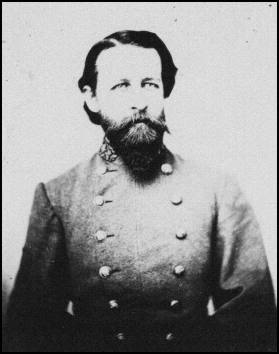
Born in 1833, John Rogers
Cooke was the son of Philip St. George Cooke
of the US army.
When war came, the young Cooke resigned his commission in
the
US
army, joined the Confederacy, and became colonel of the
27th NC.
His father
stayed in the Union army and achieved a rank of Major
General. Cooke
led the 27th at Seven Pines
where he was wounded. Cooke led a light
brigade at Sharpsburg
and is famous for his charge against the Union
center.
Here too he was wounded. Cooke
went on to fight in many more battles with the
27th.
He was promoted to Brigadier General for bravery at
Sharpsburg
and was wounded seven times in the
course of his career. He was one of the best
Southern commanders
and after the war; he was a prominent person in
Richmond.
He married Nannie G. Patton, of
Fredericksburg and they had 8 children.
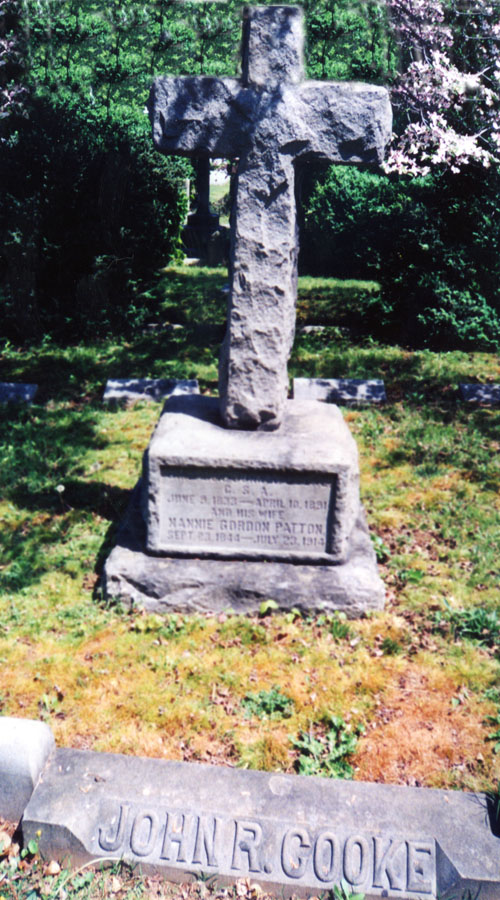
Cooke
died on April
10th, 1891.
Grave of Brig. Gen. John R. Cooke
Commander of the 27th North Carolina
Photo Courtesy of David Waller